The Hidden Goldmine Inside Your Restaurant: How to Double Your Revenue with Ghost Kitchens (Without Paying an Extra Cent in Rent)
In 2026, cost efficiency is no longer just a virtue—it is the single definitive way to run a thriving restaurant. This is why Ghost Kitchens—delivery-only food brands operating quietly out of your existing kitchen infrastructure—represent the smartest, most capital-efficient growth opportunity of our era. The concept is disarmingly simple: weaponize your current kitchen and core staff during off-peak hours to run a completely separate, parallel delivery brand. It is completely invisible on your restaurant floor, but highly dominant online.
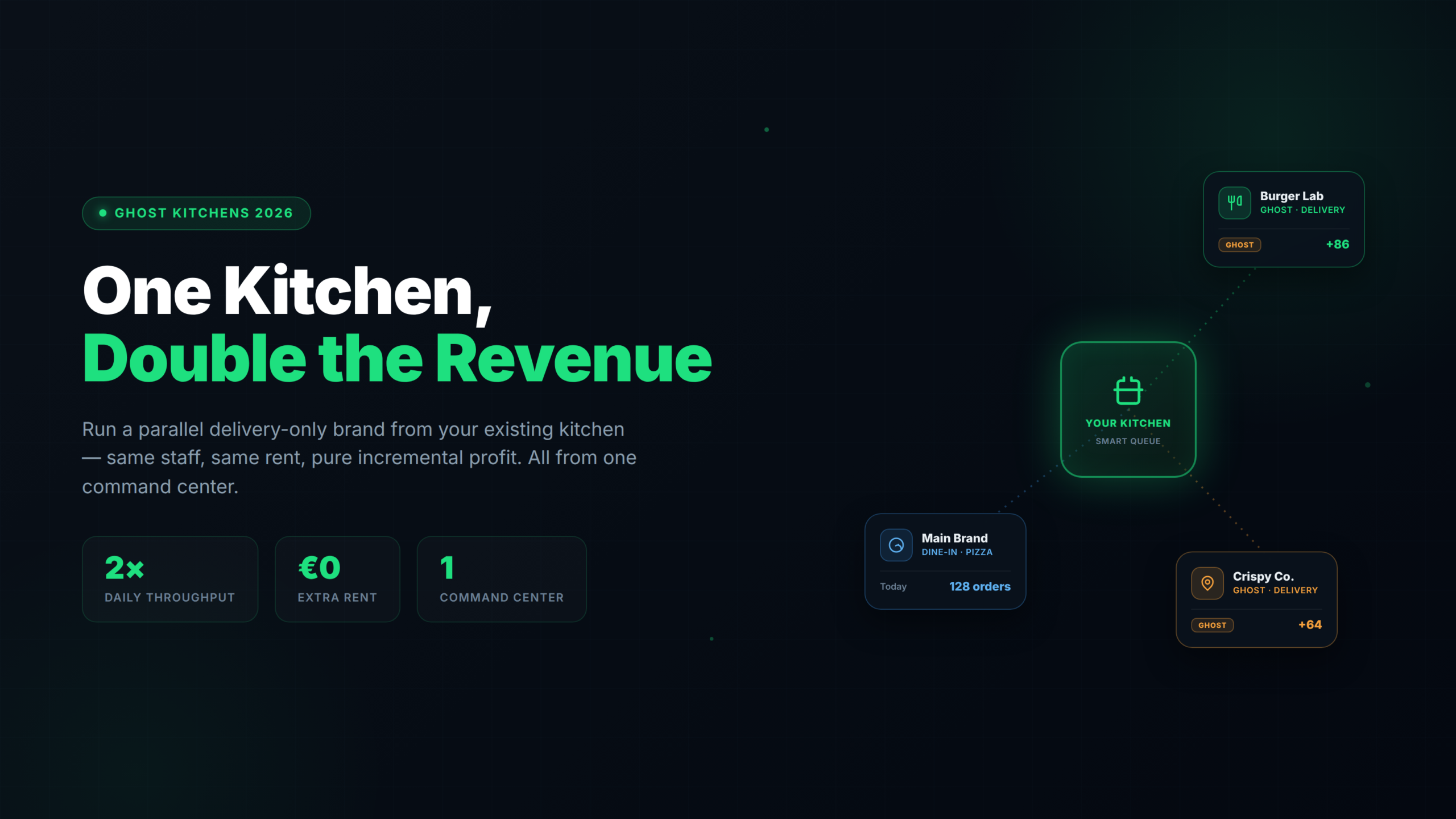
The financial logic is bulletproof. You are squeezing pure, incremental profit out of fixed overheads you are already forced to pay anyway: your rent, utility bills, and core staff salaries. Imagine a pizza restaurant that uses its slower lunch service to launch a “ghost” brand specializing in fried chicken. It can double its throughput and daily cash flow without adding a single square meter to its footprint or a single extra employee to the payroll. It is pure mathematical optimization.
MealApp Makes Complexity Invisible: Two Brands, One Single Command Center
Managing two completely separate brand identities sounds like a logistical nightmare. With most platforms, it is—but not with MealApp. Our system supports ghost kitchen operations natively and centrally.
You can create entirely distinct brand profiles, each with its own logo, strategic pricing, custom menu, and dedicated category placement on the app. Yet, everything is controlled and managed from a single device in your kitchen. Orders from both brands flow into the exact same smart queue, automatically routed to the correct station based on the ticket. Your kitchen staff doesn’t have to scramble; they just execute the dishes as they always have.
The Secret to Success: The Art of Picking the Perfect Concept
To make a ghost kitchen skyrocket, you don’t need to reinvent the wheel; you just need to be strategic. The secret lies in selecting a cuisine that complements your main brand rather than cannibalizing it, and—crucially—uses the exact same mise en place and ingredients you already have sitting in your walk-in.
Furthermore, the food must travel flawlessly without deteriorating in transit. Our 2026 data confirms that items like gourmet burgers, customizable bowls, and hot sandwiches consistently outperform more delicate dishes in delivery quality and customer satisfaction. Fewer ingredients to buy, faster execution, 5-star reviews.
Zero Risk: Launch, Test, and Scale Your New Cash Machine
You don’t need to make massive, blind investments. The beauty of launching a ghost kitchen on MealApp is the total absence of entry barriers. You can start with a soft launch: limited hours, a tightly curated menu of high-margin items, and zero traditional marketing costs.
You analyze the real-time order data MealApp provides, tweak the operational details, and only when you watch the profits roll in do you decide to scale.
Right now, you are letting your empty counter space and quiet hours work for your competitors. It’s time to fire up your kitchen engines even when your dining room is empty. Build your ghost kitchen with MealApp and claim the profit margins you truly deserve.